Harar Jugol is a walled city on a plateau in eastern Ethiopia, 525 km from Addis Ababa. Inside its walls are 82 mosques — three of them dating from the tenth century — and 102 shrines, packed into 48 hectares. UNESCO inscribed it as a World Heritage Site in 2006. It is also the only place on earth where men feed wild hyenas by hand, every night, as a matter of routine.
Most itineraries for Ethiopia run north: Lalibela, Gondar, Axum, the Simiens. Harar goes the other way, east towards Somaliland, into a landscape of deep gorges, savannah and desert. It is a different country out there — Muslim rather than Orthodox, Harari and Oromo and Somali rather than Amhara, trade rather than empire. Travellers who make the detour tend to rate it as the most distinctive place they saw.
What makes Harar Jugol a UNESCO World Heritage Site
Harar was inscribed on the World Heritage List in 2006, under four separate cultural criteria. The citation is unusually specific, and it is worth knowing what it actually says:
- The walls were built between the thirteenth and sixteenth centuries as a protective barrier. There were five historic gates, each corresponding to a main road into the town and dividing the city into five neighbourhoods. The Harar gate that most visitors now enter by is a recent addition.
- 82 mosques and 102 shrines stand within the walled city. Three of the mosques date from the tenth century.
- The townhouses are what UNESCO calls the most spectacular part of Harar’s heritage. The traditional Harari house has an architectural form found nowhere else, including elsewhere in the Muslim world — and the interiors, not the exteriors, are the point.
- The urban plan follows a sixteenth-century Islamic design: a commercial and religious core, and a maze of narrow alleys behind imposing blank facades.
Harar is widely described, including in the UNESCO citation, as the fourth holiest city of Islam. It functioned as the capital of the Harari Kingdom from 1520 to 1568, became an independent emirate in the seventeenth century, and was incorporated into Ethiopia in 1887.
The Harari house
From the alley, a traditional Harari house gives you nothing: a plain wall and a door. Inside is a single raised room with tiered platforms for sitting and sleeping, the walls hung with basketwork and painted shelves of imported porcelain, the whole room colour-saturated in red and ochre. It is a domestic art form, made and maintained by Harari women, and there is no equivalent elsewhere in Ethiopia.
Several houses are open to visitors as museums. A second building type appeared after 1887, when Indian merchants settled in Harar and built rectangular two-storey houses with wooden verandas — and then a third, which combines the two. All three are now considered part of Harari heritage.
The hyena men
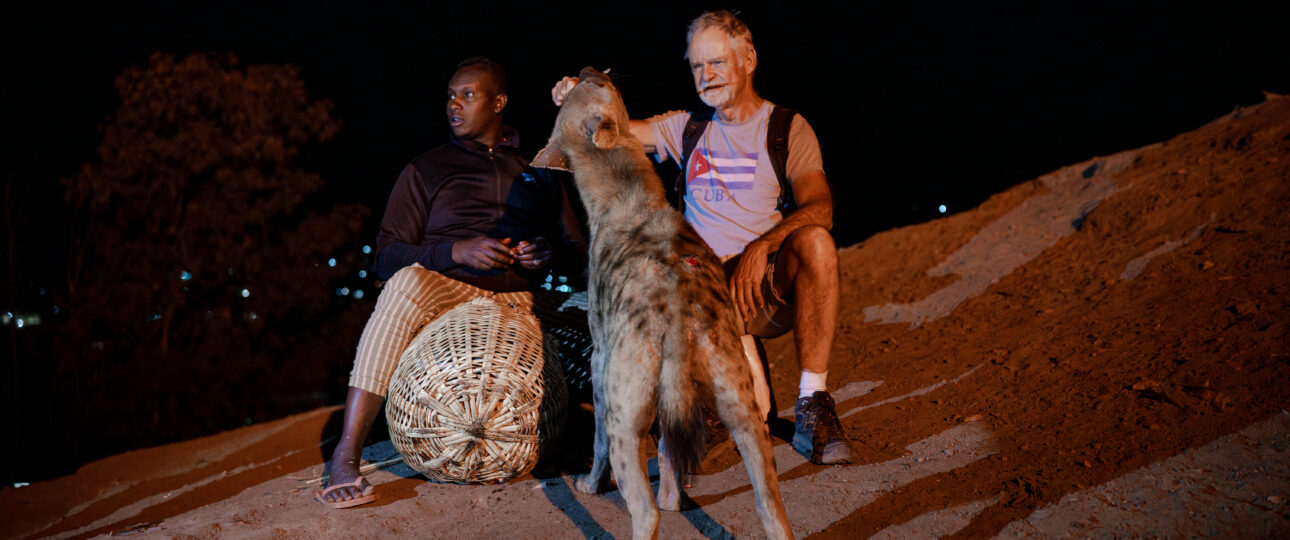
After dark, outside the walls, men call spotted hyenas in by name and feed them scraps of meat from a stick held in the hand — and, for those who want it, from a stick held in the teeth. Visitors can sit in and take a turn.
It is worth being clear-eyed about what this is. The nightly feeding that tourists attend is a paid performance, and it has been for decades. But it sits on top of something much older: a long-standing accommodation between the city and the hyenas that clean its edges, which is why hyenas move through Harar at night in the first place and why there are holes in the old walls sized for them to pass. The relationship is real. The show is a show. Both things are true, and knowing that makes it more interesting rather than less.
These are wild animals and they are large. Follow the handler’s instructions exactly, and do not decide for yourself how close is close enough.

Harar coffee
Harar is one of the three great names in Ethiopian coffee, alongside Yirgacheffe and Sidamo — and it is the oldest of them as a traded commodity, because Harar sat on the route between the highlands and the Red Sea coast. Harar coffee is dry-processed, and the cup is distinctive enough that roasters abroad sell it by name.
If coffee is the reason you are coming to Ethiopia at all, our Ethiopia Coffee Origins Tour is built around growing regions, washing stations and the ceremony itself.
Arthur Rimbaud, honestly
The French poet Arthur Rimbaud abandoned poetry in his twenties and spent his last years in East Africa as a trader, including several years in Harar. The city now has a Rimbaud museum and cultural centre in a beautifully restored merchant’s house with painted ceilings and wooden balconies.
One thing your guide may or may not mention: the building is an Indian merchant’s mansion, and it is not established that Rimbaud ever lived in it. Go anyway. It is one of the finest interiors in the city and the upstairs photography collection of old Harar is genuinely good. Just do not go expecting his bedroom.
Shuwalid
Harar has its own UNESCO-recognised festival. Shuwalid is inscribed on UNESCO’s Representative List of the Intangible Cultural Heritage of Humanity as a living tradition of the Harari community, marked after the fasting month with prayer, processions, food and reconciliation between neighbours. It is not on the standard tourist calendar, which is exactly its appeal. Its date moves with the lunar calendar, so ask us before planning around it.
Getting to Harar
Harar is 525 km east of Addis Ababa. There are two realistic approaches:
- By air to Dire Dawa, the regional gateway, with a road transfer onward to Harar. This is what most visitors do and it turns a long drive into a short one.
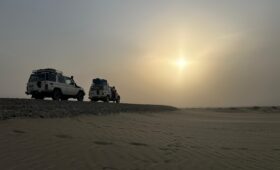
- By road from Addis Ababa, which is a serious drive and normally broken over two days. The upside is the country in between — the road east passes Awash National Park, which makes a natural overnight stop rather than a detour.
Two nights in Harar is the minimum that makes sense: one full day inside Jugol, and both evenings free for the hyenas and the night markets. Three is better.
When to go, and how to behave
The dry months from October to February are the most comfortable, which lines up with the rest of Ethiopia’s main season — see our month-by-month guide. Harar sits lower and warmer than the northern highlands, so you will want lighter clothing than Lalibela or the Simiens demand.
- Dress modestly. Jugol is a sacred Muslim city and an inhabited one. Cover shoulders and knees; a headscarf is appreciated at shrines.
- Ask before photographing. Especially women, and especially inside the market. Jugol is people’s homes, not a set.
- Khat is everywhere. Harar is at the centre of Ethiopia’s khat trade and chewing is a normal afternoon social activity. You will be offered it. Declining is entirely normal too.
- Take a local guide. This is the rare case where it is not optional — the alleyways are a maze, the significant buildings are unmarked, and access to private houses and shrines depends on the person you are with.
Before you book: check current travel advice
Conditions in Ethiopia vary by region and change, and eastern Ethiopia is one of the areas where government travel advisories are worth reading properly rather than skimming. We will not tell you an area is fine when your own government says otherwise. Read our honest guide to safety in Ethiopia, check your own foreign ministry’s current advice for the Harari region and the roads to it, and confirm that your travel insurance covers where you intend to go. Then ask us what the situation actually looks like on the ground this month.
Can Ethiosinia take you to Harar?
Yes. Our Harar, Awash & Doho Hot Springs — Eastern Ethiopia Overland is a four-day private departure that drives the whole route: wildlife and the Awash Falls in Awash National Park, a night in the thermal pools at Doho Lodge on the park’s northern edge, then two nights in Harar for Jugol and the hyenas, finishing with the short descent to Dire Dawa.
It also works bolted on to a longer itinerary, either side of the northern historic route, and we will build a three-day version if your dates are tight — the trade-offs are set out on the trip page. Tell us your dates.
Frequently asked questions
Why is Harar a UNESCO World Heritage Site?
Harar Jugol was inscribed in 2006 for its fortified sixteenth-century Islamic urban layout, its walls built between the thirteenth and sixteenth centuries, its 82 mosques and 102 shrines, and above all its traditional Harari townhouses, whose interior design UNESCO describes as the most spectacular part of the city’s cultural heritage.
How many mosques are there in Harar?
UNESCO records 82 mosques inside the walled city of Harar Jugol, three of which date from the tenth century, along with 102 shrines — all within a walled area of 48 hectares.
Can you really feed hyenas in Harar?
Yes. Outside the city walls after dark, hyena men call wild spotted hyenas by name and feed them meat by hand, and visitors are invited to take a turn. It is a paid nightly performance today, but it rests on a much older coexistence between the city and the hyenas that scavenge its edges. They are wild animals, so follow the handler’s instructions exactly.
How far is Harar from Addis Ababa?
Harar is 525 km east of Addis Ababa. Most visitors fly to Dire Dawa and transfer onward by road. Driving the whole way from Addis Ababa is possible but is normally split over two days, often with an overnight stop at Awash National Park.
How many days do you need in Harar?
Two nights is the practical minimum: one full day exploring Jugol and its museums and markets, with both evenings free for the hyena feeding and the night market. Three nights allows a slower pace and time in the surrounding countryside.
Is Harar coffee from Harar?
Harar is one of Ethiopia’s three classic coffee names, alongside Yirgacheffe and Sidamo. It refers to dry-processed coffee from the eastern highlands around Harar, which historically reached world markets through the city because of its position on the trade route between the interior and the Red Sea coast.