Irreecha is the Oromo thanksgiving, and it is one of the largest annual gatherings anywhere in Africa. In 2026 it falls across the first weekend of October: Hora Finfinne in Addis Ababa on Saturday 3 October, and Hora Arsadi in Bishoftu on Sunday 4 October.
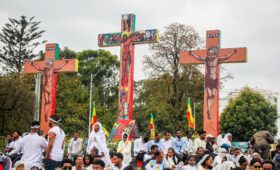
Hundreds of thousands of people dress in white, walk to the edge of a sacred lake carrying fresh green grass and flowers, dip them in the water and sprinkle it as a thanksgiving to Waaqa. It is not staged for anyone. It is the single most visually extraordinary thing that happens in Ethiopia in the first week of October, and almost no foreign itinerary includes it.
When is Irreecha 2026?
- Saturday 3 October 2026 — Hora Finfinne, in Addis Ababa.
- Sunday 4 October 2026 — Hora Arsadi, at Bishoftu (Debre Zeit), roughly 45 km south of the capital. This is the larger of the two.
Irreecha is not fixed to a calendar date. It falls on a Sunday at the turn from the rains into the dry season — traditionally the last Sunday of September or the first Sunday of October. The two-city split is a recent arrangement and the exact programme is confirmed closer to the day, so treat the dates above as firm but worth re-checking in the final fortnight. We will confirm them for anyone travelling with us.
What Irreecha actually is
Irreecha — also written Irreessa, and sometimes called Dhibaayyuu — is a thanksgiving to Waaqa, God in the Oromo tradition. It marks the end of Ganna, the long rainy season, and the beginning of Birraa, the bright season that follows.
That matters for understanding what you are watching. The rains in Ethiopia are not a mild inconvenience. Historically they meant swollen rivers that cut families off from one another, stored grain running short before the new harvest ripened, and malaria. Irreecha is the moment that ends. People are not thanking Waaqa in the abstract — they are thanking him that the roads are passable, the maize is ready and the family can gather again.
The green grass carried to the water is called irreessa, and it is the whole point: something living, taken from ground that was under water a month ago, offered back at the lake.
Irreecha and the Gadaa system
Irreecha does not sit on its own. It belongs to Gadaa, the indigenous Oromo socio-political system of generational grades, elected leadership and customary law, which UNESCO inscribed on the Representative List of the Intangible Cultural Heritage of Humanity in 2016. Gadaa is the framework Irreecha is observed within, and the elders who lead the prayers hold their authority through it.
If you take one thing away: this is a living institution, not a folk revival.
Being honest about 2016
On 2 October 2016, at the Irreecha gathering at Bishoftu, a stampede killed a large number of people. Reported death tolls range from 55 to around 300, and accounts of what triggered it differ sharply — many present blamed the actions of security forces. We are not going to adjudicate that here, and we are not going to leave it out either.
What it means for you practically: this is a crowd of hundreds of thousands in open ground near water, and crowd density is the real risk at any event of this size. Go with someone local who knows the site and the exits, stay near the edges rather than pushing toward the centre, and do exactly what your guide tells you. That is ordinary advice for any gathering this large, and it is the advice we would give a family member.
How to attend as a visitor
- Wear white if you can. Not a costume — a plain white shirt or a white shawl reads as respect and is what most people around you will be wearing.
- Go early. The walk to the lake is part of the observance, and the roads into Bishoftu fill up.
- Take a local guide. Non-negotiable for this one. Language, orientation, crowd judgement and knowing when to stand back are all things you cannot improvise.
- Ask before photographing. People are praying. A long lens from a distance is not a substitute for asking.
- This is a religious observance, not a show. The single best thing a visitor can do is be quiet and stay out of the way of people who came to pray.
- Read the current advice. See our honest guide to safety in Ethiopia and check your own government’s regional advisories before committing.
Bishoftu, beyond the festival
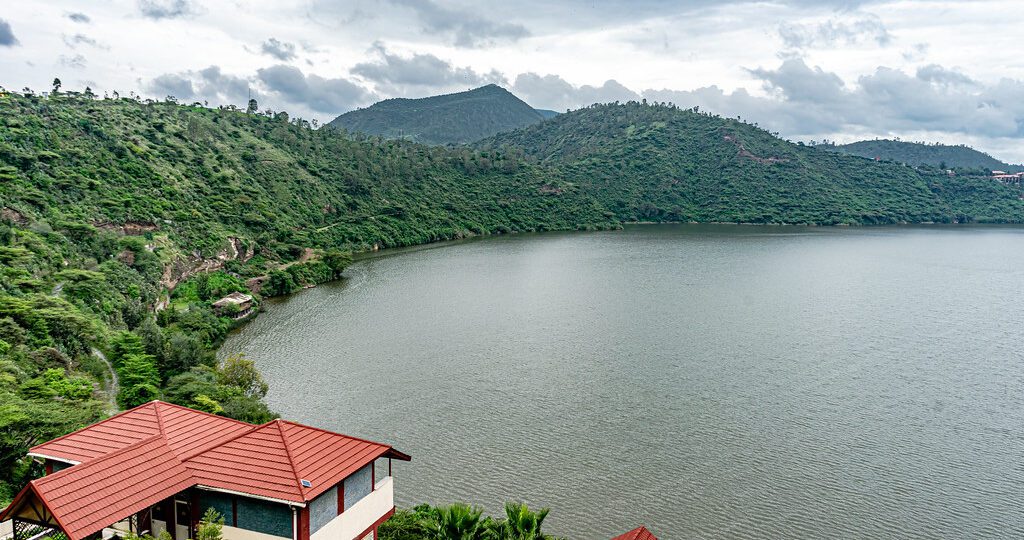
Hora Arsadi is one of a cluster of volcanic crater lakes that make Bishoftu a weekend town for Addis Ababa — Hora, Bishoftu, Babogaya, Kuriftu, Green Lake. On any other weekend it is a quiet, green, low-key place to swim, watch birds and eat fish an hour from the capital.
That is worth knowing because it makes Irreecha unusually easy to reach. Our Debre Zeit (Bishoftu) Crater Lakes day trip runs this route as a single day out of Addis Ababa. If you are in the capital during the first weekend of October, this is the rare Ethiopian festival you can decide to attend at short notice — no domestic flight, no week-long itinerary, no rearranging anything. Tell us you want to go and we will build the day around the festival instead of the lakes.
Ethiopia does not have one new year. It has several.
Irreecha is a thanksgiving rather than a new year, but it belongs to the same stretch of the calendar — the weeks when much of Ethiopia marks the turn of the year, each community in its own way and on its own reckoning.
- Enkutatash — the Ethiopian new year, 11 September, Meskerem 1.
- Gifaataa — the Wolaita new year, a ten-day festival observed between mid-September and early October, ending in goolo-igetta with horse riding, music and the elders’ final blessings. UNESCO inscribed it in 2025.
- Fichee-Chambalaalla — the Sidama new year, UNESCO-inscribed in 2015. Its date is not fixed: it is calculated by Sidama Ayantus, the traditional cultural leaders, and announced each year. In 2026 the Sidama Region celebrated it in March, in Hawassa.
And that is still not the whole list. September across southern Ethiopia also carries Yo Masqalaa of the Gamo, Ya Hode of the Hadiya, Hashu Masqala of the Kembata Tembaro, Gofa Gaze Masqalaa, Mashqare of the Kaficho, and Meskel as the Gurage keep it — each community marking the turn of the year on its own reckoning.
Most of these are announced rather than fixed. Elders, astronomers and clan leaders set the day and proclaim it, sometimes only weeks ahead. So if you are planning a trip around one of them, ask someone from that community rather than trusting a date you found online — including this page. We will give you a date when there is one to give.
And then Meskel on 27 September, and Timket on 19 January. For the full shape of the year, see our month-by-month guide to the best time to visit Ethiopia.
Frequently asked questions
When is Irreecha 2026?
Irreecha 2026 falls across the first weekend of October: Hora Finfinne in Addis Ababa on Saturday 3 October, and the larger gathering at Hora Arsadi in Bishoftu on Sunday 4 October. Irreecha is not fixed to a calendar date — it falls on a Sunday at the turn from the rainy season into the dry season, traditionally the last Sunday of September or the first Sunday of October.
What is the Irreecha festival?
Irreecha is the Oromo thanksgiving festival, held at sacred lakes and rivers to thank Waaqa, God in the Oromo tradition, for bringing the community through the rainy season. Celebrants dress in white, carry fresh green grass and flowers to the water, dip them and sprinkle the water in blessing. It marks the end of Ganna, the rains, and the beginning of Birraa, the bright season.
Where does Irreecha take place?
The two main gatherings are at Hora Finfinne in Addis Ababa and at Hora Arsadi in Bishoftu, a crater-lake town roughly 45 km south of the capital. Bishoftu draws the larger crowd. Irreecha is also observed at sacred lakes and rivers across the Oromia region and by Oromo communities abroad.
Can tourists attend Irreecha?
Yes, and visitors are generally made welcome, but it should be approached as a religious observance rather than a spectacle. Go with a local guide, wear white or plain clothing, arrive early, ask before photographing people at prayer, and stay toward the edges of the crowd rather than pushing into the centre. Because Bishoftu is a short drive from Addis Ababa, Irreecha is one of the few Ethiopian festivals that can be added to a trip at short notice.
Is Irreecha a UNESCO heritage festival?
Irreecha itself is not separately inscribed, but it is observed within the Gadaa system — the indigenous Oromo socio-political system of generational grades, elected leadership and customary law — which UNESCO inscribed on the Representative List of the Intangible Cultural Heritage of Humanity in 2016.
Is Irreecha safe to attend?
Irreecha draws hundreds of thousands of people, and crowd density is the main practical risk, as at any gathering of that size. A stampede at the Bishoftu festival on 2 October 2016 killed a large number of people, with reported tolls ranging from 55 to around 300 and differing accounts of the cause. Attend with a local guide who knows the site, keep to the edges of the crowd, and check your government’s current regional travel advice before you commit.